STOCK PHOTO LIBRARY SEARCH
Enter Keywords or Photo's ID, e.g. UFL-0068
 

Our Image Library features only the best from Thomas Wiewandt's 30-year career as a professional nature and travel photographer, along with selected digital images from world-class underwater photographer Barry B. Brown.
 
Return to HomePage Learn more about Thomas Wielwandt View collection of stock images View our pricing details Tons of gifts; cards, frames Contact Us via email
    HOMEPAGE NEWS

PHOTO RESEARCHERS!
Our site has been designed to allow you to quickly determine if we have the photos you are looking for, backed by e-commerce licensing. We are now featuring about 2,000 of the 30,000 pictures in our film archive. So please be patient as new images are added.

   STOCK PHOTO LIBRARY

  :: Abstracts / Tapestries
  :: Fauna - Wildlife
  :: Flora
  :: Geology
  :: Human World
  :: Landscapes - Habitats
  :: Ocean Realm
  :: Prehistoric Life - Fossils
  :: Weather - Sunsets
 
   USER REGISTRATION

For access to all viewing and licensing features of our website, CLICK HERE TO REGISTER

To learn more about our LIGHTBOX feature, CLICK HERE

 Username:
 
 Password:


:: Forgot password
copyright by Thomas Wiewandt, WildHorizons.com
Picture of the Week


THE WILD HORIZONS® RIGHTS-MANAGED
NATURE AND TRAVEL PICTURE LIBRARY

...your gateway to the beautiful and unusual

Images in our new STOCK PHOTOGRAPHY LIBRARY may be licensed for print or electronic use. Our high-resolution files are clean, adjusted, and ready for buy-now, on-line delivery through our secure server.

If you are a first-time visitor, please read our SEARCH TIPS . . . and don't miss our underwater pictures! You may also purchase small, inexpensive prints of any photo in our picture library.

copyright by Thomas Wiewandt, WildHorizons.com copyright by Barry B. Brown, copyright by Thomas Wiewandt, WildHorizons.com
Copyright © 2008 Wild Horizons Publishing, Inc. :: Copyright Notice
Wild Horizons, attn: Thomas Wiewandt, PO Box 5118, Tucson, Arizona 85703 USA :: tel. 520-743-4551
Wild Horizons® is a Federally Registered Trademark :: Trademark Notice
Report problems to Webmaster


ABSTRACTIONS + TAPESTRIES

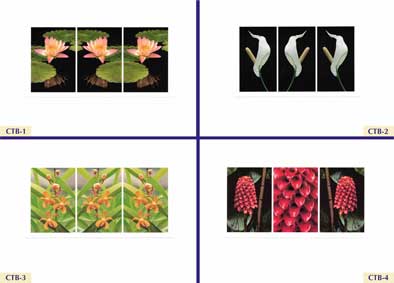
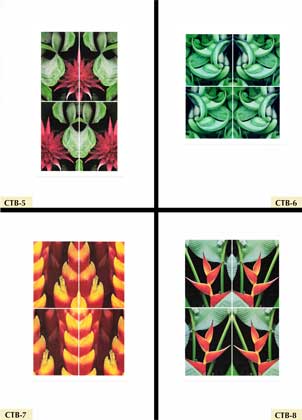
Photographs of plants, animals (including some fossils), sand, rocks, minerals, water, and scenery that emphasize form, design, patterns, and abstractions. Many of these images are suitable for use as backgrounds, puzzles, gift-wrap, book endpapers, etc.

Images already added to our e-library include ammonites and nautilus shells, coral patterns, sea anemone, basket star, fish schools, a two-eyed peacock feather, lizard skin, wildflower tapestries, evergreen and tropical foliage, floral close-up designs, cactus spines, sandstone and slot canyon abstractions, water reflections, and fire.


GEOLOGY

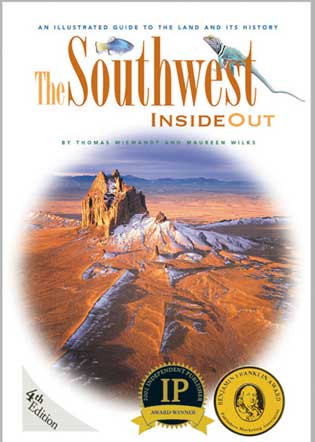
The American Southwest is a natural showcase of geological wonders, among the world’s most awe-inspiring. Many of our best photos of southwestern landscapes and geological landforms can be seen in our featured book The Southwest Inside Out – An Illustrated Guide to the Land and Its History. All of these photographs are available for licensing; please be patient as we scan this material at high resolution and add it to our website. If you are working on a project that requires many images from the American Southwest, we suggest that you purchase a copy of this book to see what we have to offer.

Pictures that have been added to our image library so far include assorted photos of Grand Canyon National Park, including the historic Watchtower and Lookout Studio on the South Rim of Grand Canyon; views from Cape Royal and of Mt. Hayden at Point Imperial on the North Rim of the Grand Canyon; winter and autumn scenes at Grand Canyon; and tourists on mule rides within Grand Canyon. Photos of other southwestern canyons that have been added to our website’s stock image library include Tucson’s Sabino Canyon in autumn and northern Arizona’s most famous slot canyon, Antelope Canyon.

Other geology-related images already added to this image library include Indian paintbrush wildflowers growing in a crack in a rock wall, colorful layers in sandstone rock, a Sonoran desert arroyo before and during a flash flood, ropy pahoehoe lava colonized by a Mollugo plant in the Galapagos Islands, a hot spring with a bison in winter at Yellowstone National Park, and a landscape with horses and buttes in Monument Valley.


FLORA

Our film archive holds an enormous diversity of floral imagery from field locations and gardens in the United States and abroad, only a small sample of which has been scanned so far.

Best represented in our e-library at this time are members of the cactus family, the Cactaceae. We are featuring close-up and landscape photographs of columnar cacti, pincushion cacti, hedgehog cacti, barrel cacti, prickly pear cacti, and some colorful hybrids, primarily torch cacti. Many have flowers, some are in fruit, and others show spine patterns and skin textures. One image shows lightning damage to a saguaro cactus in the Sonoran Desert; and another single sunflowers in short-grass prairie of South Dakota.

We have photographs of Temperate rainforest trees, bracket fungi, and mountain wildflowers from the Pacific states; desert wildflowers from Arizona, California, and Sonora, Mexico, with landscapes of the Sonoran and Mojave deserts in bloom; wildflowers of the Texas Hill Country; tree ferns and maidenhair ferns; and spring foliage from Great Smoky Mountains National Park.

So far, only two garden flowers have been added to our library, dahlia and treasure flower. Many more will follow in the months ahead.


HUMAN WORLD + TRAVEL

If you are interested in a specific park, state, or other geographic location, we recommend that you use our SEARCH window to see all pictures from that place. This section of our e-library focuses on human settlements and structures; life-style; agriculture; modern art; ancient rock art (petroglyphs and pictographs); research and technology; and environmental concerns such as pollution and global warming.

Under TRAVEL / PEOPLE + PLACES, you will find photos suitable for travel brochures and books. Some of our travel images include people, others do not; and those without people only feature cultural attractions, landscapes, and wildlife that we believe are iconic to that travel destination.

Travel destinations best covered in our e-library at this time include Ecuador and the Galapagos Islands (mostly island birds and rainforest butterflies); Caribbean islands, emphasizing dolphins and scuba diving in Curacao, snorkeling with humpback whales in the Dominican Republic’s Silver Bank, and wildlife of Puerto Rico, especially that of Mona Island; East African landscapes and wildlife (mostly birds); and the American Southwest, with a focus on Grand Canyon National Park, Hubbell Trading Post, and scenic attractions + wildlife of the Sonoran Desert region.

Images of Arizona’s Hubbell Trading Post, interior and exterior views of the Watchtower at Grand Canyon National Park, Tucson’s San Xavier Mission, tooled leather, and a typical New England fishing village appear in our ART + ARCHITECTURE category.

Under ENVIRONMENTAL ISSUES / POLLUTION + GLOBAL WARMING, you’ll see photographs of litter on the ocean floor, a dolphin swimming in an oil slick, forest clear-cutting, electricity pylons, and a duck snagged by a fishhook.

So far, our e-library only contains SCIENTIFIC RESEARCH images related to birds—with bird-banding and aviculture of endangered crane species at the International Crane Foundation being the focus—and undersea exploration in a mini-submarine in Curacao.

Our library of pictures of butterflies is huge, and in our AGRICULTURE / FARMING / RANCHING category we have included images of butterfly farming (a sustainable form of micro-livestock) along with cattle ranching in the American West.


LANDSCAPES / HABITATS / BIOMES

Anyone seeking pictures that offer scenic views of world landscapes and habitats, with or without wildlife, should check out this section of our site.

Among FOREST types, we have subalpine forests of the Pacific Northwest; Puerto Rican subtropical rainforest in the tree ferns zone; temperate forests in Grand Canyon National Park; New England in autumn; Prairie Creek Redwoods State Park; Great Smoky Mountains National Park; and Olympic National Park (including forest clear-cutting in Washington state).

Our pictures of DESERT landscapes focus on the Sonoran Desert in both Arizona and Mexico. Included are scenics with saguaro cacti, some highlighting desert weather phenomena and spring wildflower blooms.

Most of our GRASSLANDS photos illustrate short-grass prairie, with and without American mustangs, in South Dakota.

Within MOUNTAINS of North America, you’ll find pictures of the Cascade Mountain Range in Washington of the Pacific Northwest; peaks in the Sierra Nevada; and sky islands of the desert Southwest.

Our photos of fresh-water WETLANDS include images of Goose Pond in the Walden Pond State Reservation; a stream in Great Smoky Mountains National Park; flamingo lakes of East Africa, including Ngorongoro Crater and Lake Nakuru in the Great Rift Valley; yellow-billed stork in wetlands of Yala National Park, Sri Lanka; a riparian stream in Sabino Canyon, Arizona; and photos of herons, ibis, egrets, and storks in fresh-water marsh and swamp habitats of lake edges in East Africa and Sri Lanka.

For anyone interested in well organized, authoritative natural history and photographic tours of Sri Lanka, we recommend Amila Salgado's Birdwing Nature Holidays.


WEATHER

Weather is one of our specialties. We have pictures of clouds and cloud formations, selected to show different TYPES OF CLOUDS, including mammatus, altocumulus, altostratus, cirrocumulus, stratus, cirrostratus, cirrus, cumulus, cumulonimbus, nimbus clouds, nimbostratus, and crepuscular rays. Vernacular terms related to our cloud photos include puffy clouds, fluffy clouds, white clouds, white fluffy clouds, fair weather clouds, high clouds, mare’s tail clouds, buttermilk sky clouds, fog, storm clouds, severe weather, thunder clouds, rain clouds, black clouds, dark clouds, light shafts, sun rays, and walking rain.

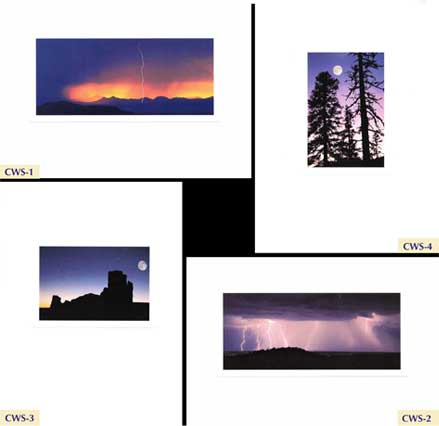
In our archive of RAIN AND STORM PHOTOS, we offer pictures of virga (rain that evaporates before reaching the ground), rain storms, a flash flood, gust fronts, and an enormous file of LIGHTNING PHOTOS—soon to be added—including types of lightning, lightening to those who can’t spell. Among them is cloud-to-ground lightning (a.k.a. ground discharge lightning), intra-cloud lightning, air discharge lightning (a.k.a. cloud-to-air lightning), spider lightning, visually separated lightning strokes in a lighting channel, sheet lightning, forked lightning (a.k.a. branched lightning), a fulgurite, and lightning damage to a saguaro cactus.

Largely because of its clear air and rugged, isolated mountain ranges, the American West is renowned for spectacular SUNSETS, often with RAINBOWS, and we have a large assortment of sunset pictures, mostly Arizona sunsets.


PREHISTORIC LIFE / FOSSILS

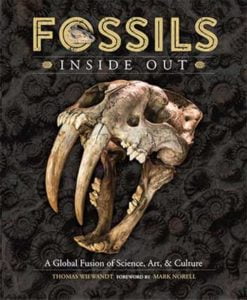
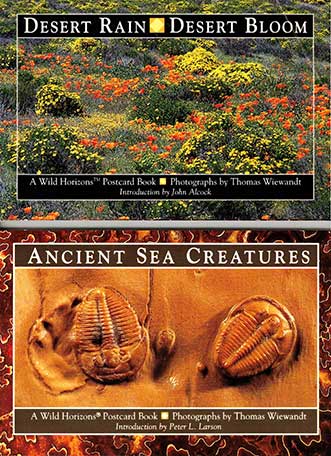
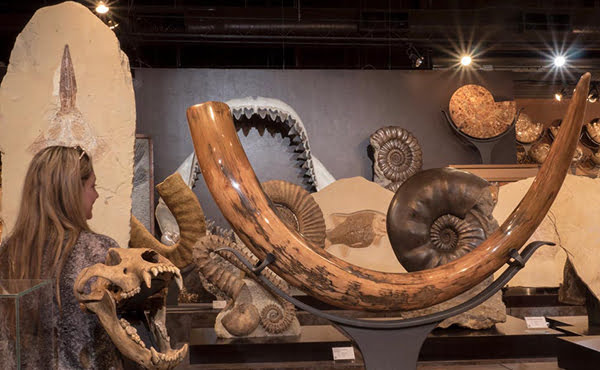
For nearly 20 years, Thomas Wiewandt has been working with fossil collectors, buyers, and artists who bring prize specimens from all over the world to Tucson’s Gem, Mineral, and Fossil Show. And over this time, the show has undergone a evolution of its own, with no two years being alike. Tom’s film archive is deep and exciting in that it encompasses a photographic record of prehistoric life seldom seen outside of museums, including such rarities as dinosaur nests from China; a fully articulated skeleton of a saber-tooth cat from Nebraska; pterosaurs (flying reptiles), crinoids, and spectacular coelacanths (lobe-finned crossopterygian fish) from Germany. Modern coelacanths are living fossils, as are crinoids; and we have photos of living crinoids on a coral reef in Curacao.

Pictures of fossils currently on our site are few at this time. Scanning and properly cataloging this material is an enormous job, so please be patient. Meanwhile, if you are working on a project requiring photos of fossils, please inquire.


FAUNA / WILDLIFE

Biogeographic areas best covered in our film archive of wildlife photos are the American Southwest, mostly in the Sonoran Desert; islands of the Caribbean, especially Puerto Rico, Mona Island, the Dominican Republic, and coral reefs of Curacao and Bonaire in the Netherlands Antilles; the Galapagos Islands; and East Africa, Kenya and Tanzania. Much of this material has been scanned and is in the process of being added as time permits.

Our primary focus on INVERTEBRATE ANIMALS has been insects, largely represented by pictures of butterflies and moths. Many were photographed in butterfly houses or on butterfly farms, with species imported from all over the world.

Of the AMPHIBIANS, we’ve documented the life cycle of spadefoot toads, including cannibalism among tadpoles.

Our archive of REPTILE photos is large. We have tortoises, snakes, crocodilians, and, most importantly, lizards. You’ll find a selection of horned lizard photos and other Sonoran desert species, including Bipes, a two-legged worm lizard. Tom spent three years documenting the Biology of Gila Monsters and Beaded Lizards for Daniel Beck’s book on this family of venomous lizards, and his Gila monster photos will soon be added to our site.

Because BIRD pictures represent a relatively small part of our collection, most have been scanned, although many remain to be added to our e-library. Our archive centers on wild species native to the Sonoran Desert, Caribbean and Pacific islands, and East Africa; and on rare species in captivity.

At this time, our strongest coverage includes flamingo pictures (colonies of greater and lesser flamingos and American flamingos) and pictures of cranes, many of which are threatened or endangered species. We have crane watchers, cranes flying, and cranes in a corn field; whooping cranes, including foster care of chicks with the aid of surrogate moms and crane puppets; sandhill cranes (including a nest in Okefenokee Swamp); blue cranes; white-naped cranes; Brolga crane; black-necked crane; African black-crowned and gray-crowned cranes; a Siberian crane with chick; hooded cranes; and red-crowned cranes. These pictures document aviculture and captive breeding of threatened and endangered species at the International Crane Foundation.

Other photos of birds that have been added to our e-library include yellow-billed, painted, and marabou storks, the latter scavenging for food; yellow-crowned night heron and the goliath heron, the world’s largest heron; sparring moorhens; kori bustard; gold-fronted and Gila woodpeckers; Harris hawk and great horned owl; broad-billed, rufous, and black-chinned hummingbirds, the latter at a hummingbird feeder; wattled plover and killdeer at nest; birds endemic to the Galapagos (hawk, dove, Hood mockingbird); Merriam’s wild turkey; peacock and two-eyed peacock feathers; red junglefowl rooster; harlequin, scaled, and Gambel’s quail; African spurfowl and vulturine guineafowl; emu; ostrich nest and threat display; lesser bird of paradise; cactus wren and curve-billed thrasher nesting in cactus; white-wing doves; roadrunner; birds feeding chicks; bird-banding technique; eastern meadowlark singing; Canada geese, Egyptian goose, and nene goose, the endangered native Hawaiian goose; Australian black swans; white-faced tree ducks; red-headed duck; falcated teal; ring-necked duck, one snagged by a fishhook; sea ducks in Acadia National Park; Puerto Rican tody; great hornbill and red-billed hornbill; courtship and mating in Egyptian vultures; black vultures on a road-kill carcass; California condors; and parrots, namely scarlet macaw, hyacinth macaw, blue-and-gold macaw, green-winged macaw, and lilac-crowned parrot.

To date, few of our images of LAND MAMMALS have been added to this website. Best represented are photos of horses, especially American mustangs at Dayton Hyde’s Black Hills Wild Horse Sanctuary. We also have pictures of Kentucky horse farms, cowboys on horseback, a cowboy camp, and Percheron horses pulling a chuckwagon.

Other photos of mammals already added to our e-library include scavengers, a black-backed jackal and a lappet-faced vulture (Nubian vulture), fighting over access to a young wildebeest kill; coyotes in the Sonoran Desert; a baby Eastern cottontail rabbit, the cutest bunny imaginable; bison in Yellowstone National Park; a ringtail ‘cat’; mule deer in Grand Canyon National Park and Olympic National Park; and a cactus mouse eating a prickly pear cactus fruit.


OCEAN REALM

Our photographs of the larger SEA BIRDS—gulls, boobies, albatross, frigatebirds, and penguins—appear in this section of our website. Already posted are black-backed, herring, and swallow-tailed gulls; Galapagos penguins; waved albatross; masked, brown, red-footed, and blue-footed boobies with eggs and chicks; guano; and magnificent frigatebirds, flying and courting.

Topping our list of MARINE MAMMALS are dolphin pictures and photos of the Atlantic race of humpback whales. Our bottlenose dolphin photos include images of baby dolphins and individuals with lots of personality. Because Barry Brown’s wife, Aimee, works as a trainer at the Dolphin Academy in Curacao, he has had close contact with these animals on a regular basis and has amassed an impressive collection of dolphin images. Swimming with humpback whales, Tom photographed them from the viewpoint of snorkeling whale-watchers at the Silver Bank north of the Dominican Republic. His coverage shows details of humpback whale anatomy (the eye, blow hole, tubercles, fluke, dorsal fin), a whale baby, and whale behavior above and below water, including what appears to be a courtship dance, fin-slapping, bubble-blast, and escort-challenger interactions.

When not photographing dolphins, Barry spends much of his time exploring Curacao’s CORAL REEFS and shipwrecks with his camera. He has also made several dives in Bonaire. His patience and skill as both diver and photographer are evident in the up-close and personal pictures he brings to our website, so much so that Ikelite has chosen to sponsor Barry's underwater photography. His digital archive includes portraits of nearly all of the common and rare fish, hard and soft corals, and sponges in this part of the Caribbean. His files include a wide diversity of the unusual and beautiful, ranging from basket stars and sea pearls (spherical marine algae) to Christmas tree worms and seahorses. Frogfish, scorpionfish, peacock flounder, and octopus are masters of camouflage, all well documented here.

Barry’s passion for night-diving has allowed him to capture some of the best pictures of Caribbean reef squid available on the Internet, along with images of parrotfish making their mucous sleeping cocoons.

On the human side, we have photographed recreational skin divers, scuba divers, and scientists studying coral reefs in a mini-submarine. We have also explored seacoasts with our cameras, to capture photos of beaches, waves and surfers (soon to be added), life in tide pools, and seashells.